

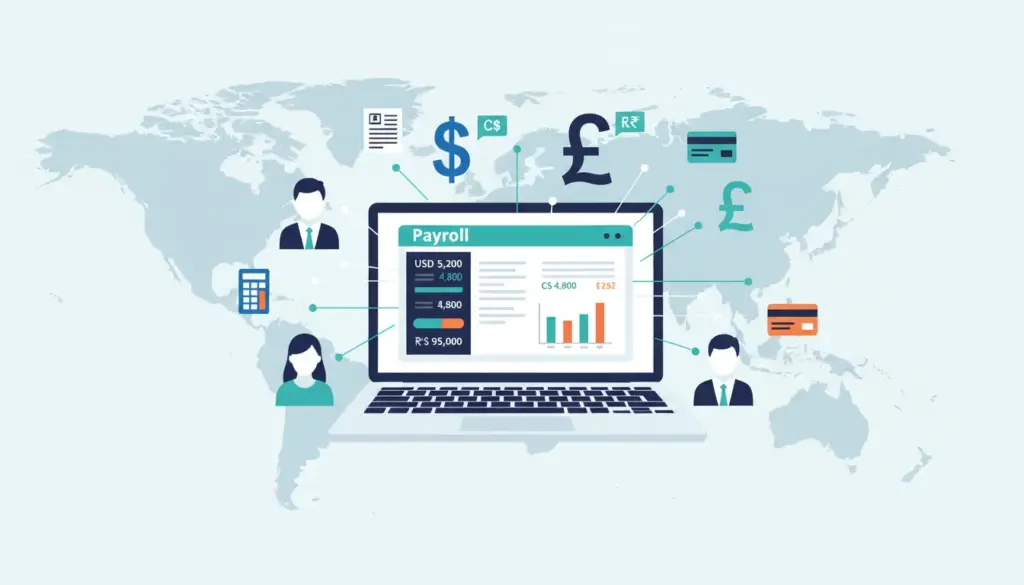
You found your dream developer in Pakistan. A killer designer in Canada. A growth marketer in the UK. Then payday hits, and reality sets in. Different tax codes. Different currencies. Different statutory contributions. Different filing deadlines. One miss and you're staring at penalties, unhappy employees, or both.
That's where employer of record payroll services change the game. This guide breaks down exactly how EOR payroll works, what it includes, how much it costs, and how to choose the right provider so your global payroll runs cleanly every single month. Written for HR leaders, founders, agencies, and recruiters who want their international team paid right without building a finance department in every country.
What Are Employer of Record Payroll Services?
An employer of record (EOR) is a third party that legally employs your workers in countries where you don't have a registered entity. EOR payroll services are the part of that model that handles paying your international team correctly: calculating wages, withholding taxes, filing returns, paying statutory benefits, and getting money into employees' bank accounts on time, in their local currency.
You decide who to hire and what to pay them. The EOR makes sure the math, the compliance, and the actual money movement all work the way they should.
For the broader picture, see what is EOR and our deeper guide on the employer of record model.
What's Actually Included in EOR Payroll Services?
A proper EOR payroll service covers a lot more than just sending money. The full scope usually includes:
- Locally compliant employment contracts in the right language
- Gross-to-net wage calculations using current local rules
- Withholding income tax and employee social contributions
- Paying employer-side social contributions (CPP and EI in Canada, NI in the UK, EOBI in Pakistan, FICA in the US)
- Statutory benefits like pension, health, and paid leave
- Bonuses, commissions, overtime, and shift premiums
- Provident fund and gratuity calculations where required
- Expense reimbursements and equipment stipends
- Multi-currency payouts in local currency
- Monthly, quarterly, and annual tax filings (T4 in Canada, P60 in the UK, W-2 in the US, etc.)
- Compliant payslips for every employee
- Audit-ready records and reporting
A real EOR payroll partner doesn't just process payroll. They run it end-to-end so you don't have to think about it.
Why Companies Use EOR Payroll Services
The reasons are practical, not theoretical.
- Compliance built in. Local payroll laws change constantly. The EOR keeps up so you don't have to.
- Speed. New hires can be onboarded and paid within 1 to 2 weeks.
- Cost control. Skip the cost of setting up entities, opening local bank accounts, and hiring in-country accountants for every market.
- Single platform. One place to view payroll across every country.
- Accuracy. Local payroll experts catch what generic global tools miss.
- Employee trust. Getting paid correctly and on time is non-negotiable for retention.
- Audit-ready records. Clean data for finance, legal, and tax teams.
For agencies scaling delivery teams and recruiters placing offshore talent, EOR payroll is what turns global hiring from a finance nightmare into a clean monthly process.
EOR Payroll vs DIY Global Payroll
Some companies try to handle international payroll themselves through patched-together tools or local vendors. Here's how the two stack up.
| Factor | EOR Payroll Services | DIY Global Payroll |
|---|---|---|
| Setup time | 1 to 2 weeks per hire | 3 to 6 months per country |
| Setup cost | Minimal | $20K to $80K per country |
| Ongoing complexity | Single provider | Vendor per country |
| Compliance risk | Owned by the EOR | Owned by you |
| Currency handling | Built in | Manual |
| Scalability | High | Painful |
| Best for | Hiring across many countries | Single-market companies with deep local expertise |
If you're hiring across more than one or two countries, DIY payroll almost always becomes the bottleneck. EOR payroll services exist precisely to remove it.
Global Employer of Record Payroll: The Hidden Complexities
Cross-border payroll looks straightforward until you start running it.
- Currency volatility. Pay rates set in USD swing in CAD, GBP, or PKR every month if you're not careful.
- Tax brackets shift. Canada updates federal and provincial brackets annually. The UK runs on a tax year starting April 6. Pakistan revises slabs through the Finance Act each year.
- Local benefits. Mandatory contributions to CPP and EI in Canada, NI and auto-enrolment pensions in the UK, EOBI and provident fund in Pakistan, 401(k) and FICA in the US.
- Gratuity and end-of-service payouts. Common in Pakistan and many parts of Asia and the Middle East.
- Public holidays and statutory leave. Wildly different country by country.
- Termination payouts. Severance rules vary from "minimal" to "very expensive."
- Filing deadlines. Miss one and penalties stack quickly.
A solid global EOR or international EOR bakes all of this into the service. You see one clean monthly invoice. They handle the rest.
How EOR Payroll Actually Works, Step by Step
The flow is simple once you map it out.
- You hire. The EOR signs the locally compliant contract.
- You set the pay. Salary, bonuses, allowances, all in your dashboard.
- The EOR calculates payroll. Gross-to-net using current local rules.
- You approve. One click per pay cycle.
- The EOR funds payroll. From your single invoice in your home currency.
- Money lands in the employee's bank account. In local currency, on time.
- The EOR files everything. Taxes, social contributions, year-end reports.
- You get clean records. For finance, tax, and audit.
That's a recurring monthly process most clients spend less than 30 minutes on. The EOR does the heavy lifting in the background.
International EOR Payroll Services: Where It Gets Tricky
When payroll spans multiple countries, you need an EOR that can actually deliver in every market without subcontracting compliance to mystery partners.
Watch for:
- Owned entities in the countries that matter to you, not partner-only setups
- Local payroll experts rather than offshored generalists
- Real banking infrastructure for clean multi-currency payouts
- Transparent FX rates with no hidden markup
- Built-in compliance monitoring for changing laws
- Modern HR and payroll platform that doesn't feel like 2010
A weak provider in even one country can break your whole payroll experience. Choose accordingly.
EOR Payroll vs PEO vs Contractor of Record
Three models, three different uses. Quick reference:
| Model | Best For | Worker Type |
|---|---|---|
| EOR Payroll Services | Full-time employees in countries with no entity | Employee |
| PEO Payroll | Full-time employees where you already have an entity | Employee |
| Contractor of Record | Independent contractors globally | Contractor |
If you're using freelancers instead of employees, what is contractor of record and what does COR stand for explain that model in detail. Comparing EOR with staffing options? Employer of record vs staffing agency breaks down the differences cleanly.
How Much Do EOR Payroll Services Cost?
Pricing models vary, but the two most common are:
- Flat monthly fee per employee. Usually $400 to $700 per employee per month, payroll included. Most predictable.
- Percentage of payroll. Usually 8 to 15 percent. Gets expensive as salaries grow.
Watch for:
- FX markups on currency conversion
- Setup fees per country
- Per-payslip processing fees
- Off-cycle payroll charges
- Termination processing fees
The honest providers publish all of this upfront. The sketchy ones bury it in fine print and surprise you on invoice 3.
How to Choose the Right EOR Payroll Provider
Run any provider through this checklist before signing.
- Owned entities in your target countries
- In-country payroll specialists, not just a global support pool
- Transparent flat pricing
- Fair FX rates and clean multi-currency payouts
- Real-time payroll platform with self-service for employees
- Integration with your existing finance and HR tools
- Audit-ready reporting and clean year-end documents
- Responsive human support around payroll cutoffs
- ISO 27001 certification for data security
- Clean exit terms if you ever want to move to your own entity
For a deeper view of what good EOR service providers actually offer, that guide walks through the evaluation process in detail.
Where Paismo Fits
Most "EOR payroll" providers stop at processing payroll. They calculate wages, send the money, file the basic returns, and call it done. That works until you start scaling and the cracks show.
Paismo EOR was built differently. It pairs an owned global entity network with a modern HR and payroll platform, so your payroll runs as cleanly in Karachi as it does in Toronto, London, or New York. Here's what's included:
- Locally compliant payroll across 100+ countries, including Canada, the UK, Pakistan, and the US
- Owned entities in core markets, hybrid setup for global reach
- Automated payroll that handles gross-to-net, withholdings, statutory contributions, and filings
- Multi-currency payouts with transparent FX
- Integrated time and attendance and leave management so payroll inputs flow automatically
- Full Core HR system to manage employees, not just pay them
- Dedicated local HR support for your team
- Transparent flat pricing with no surprise fees
- ISO 27001-grade data security
- Offices in the US, UAE, and Mexico, with global reach
If you're running payroll across multiple countries (or planning to), Paismo combines compliance, payroll, and full HR in one platform so you spend less time wrangling vendors and more time building your team.
Common Mistakes Companies Make With Global Payroll
A few patterns trip teams up.
- Treating all countries the same. Canadian payroll is not UK payroll, and Pakistan payroll has its own rules.
- Using a single global payroll tool for everything. Most don't handle compliance well.
- Ignoring FX markups. Hidden FX margins can quietly cost thousands a month.
- Misclassifying employees as contractors to "save money." Almost always backfires.
- Skimping on benefits. Mandatory benefits aren't optional. Skipping them is illegal and you'll lose talent fast.
- Choosing the cheapest provider. Bad payroll quietly breaks employee trust.
A small amount of upfront diligence saves a lot of operational pain later.
FAQs
What are employer of record payroll services?
EOR payroll services are the part of an employer of record offering that handles paying your international team correctly. That includes wage calculations, tax withholdings, statutory contributions, multi-currency payouts, and all government filings, in countries where you don't have your own legal entity.
How does EOR payroll work?
You hire the employee. The EOR signs a locally compliant contract and runs payroll on your behalf, calculating gross-to-net, withholding the right taxes, paying the employee in local currency, and filing all the necessary forms. You approve payroll each cycle, fund a single invoice in your home currency, and the EOR handles everything downstream.
Is EOR payroll cheaper than setting up a foreign entity?
For most teams, yes, especially under 10 to 15 employees per country. Entity setup costs $20K to $80K+ per market plus ongoing accounting and legal overhead. EOR payroll usually runs $400 to $700 per employee per month with no setup. The math flips toward your own entity once headcount in a single country gets large.
Can an EOR pay employees in their local currency?
Yes. That's one of the core reasons companies use EOR payroll. Whether your hire is paid in CAD, GBP, PKR, USD, or any other currency, the provider handles conversion, local payment rails, and clean records for tax reporting in every market.
What's the difference between EOR payroll and global payroll software?
Global payroll software helps your existing entities run payroll. EOR payroll includes the legal employment, compliance, and infrastructure to run payroll in countries where you have no entity. You can't replace an EOR with a payroll tool unless you also set up local entities.
Does EOR payroll cover benefits?
Yes. Statutory benefits like CPP and EI in Canada, NI and pensions in the UK, EOBI and provident fund in Pakistan, and FICA in the US are all part of the EOR offering. Most providers can also administer supplementary benefits like private health insurance, equipment stipends, and learning budgets.
How fast can a new hire get paid through an EOR?
Most new hires can be onboarded and paid within 1 to 2 weeks of signing. Compare that with 3 to 6 months to set up a new foreign entity and start running payroll yourself.
Ready to Run Global Payroll the Easy Way?
Your team should never wonder whether payday will land right. EOR payroll services exist to make that worry disappear, no matter where in the world your people sit.
If you're ready to stop chasing compliance across borders, Paismo EOR gives you owned global infrastructure plus a modern HR platform, so your payroll runs cleanly every cycle. Book a quick call and a specialist will walk you through your payroll plan, country by country.