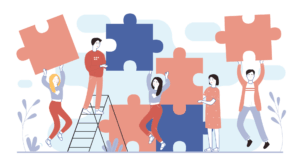

Team building refers to a range of activities and strategies designed to strengthen relationships, improve collaboration, and build trust among employees.
The goal is to create a more cohesive and effective workforce by enhancing communication, problem-solving, and overall team performance.
Why Is Team Building Important?
- Improves collaboration: Encourages employees to work together more effectively.
- Builds trust: Strengthens interpersonal relationships across teams.
- Boosts engagement: Helps employees feel more connected to their colleagues and the organization.
- Enhances productivity: A well-functioning team is often more efficient and innovative.
- Supports company culture: Reinforces organizational values and creates a positive work environment.
Types of Team Building Activities
- Icebreakers and social activities: Fun, casual exercises to encourage bonding.
- Skill-based workshops: Training sessions that improve teamwork, communication, or problem-solving.
- Collaborative projects: Group tasks that simulate workplace challenges.
- Outdoor or offsite events: Retreats, sports, or adventure activities that build camaraderie outside the office.
Benefits of Team Building
- Increased motivation and morale
- Stronger communication across departments
- Reduced workplace conflict
- Higher employee retention
- Better alignment toward organizational goals
Bottom line: Team building isn’t just about fun activities, it’s a strategic HR practice that strengthens relationships, improves collaboration, and creates a healthier, more productive workplace.