


Key Highlights
- A clear warning letter template helps you handle disciplinary issues consistently, fairly, and without emotional bias.
- Written warnings clarify expectations, document concerns, and give employees a structured opportunity to improve.
- Using a standardized template protects your company by aligning actions with policies, legal requirements, and internal procedures.
- When delivered through open, two-way conversations, written warnings can strengthen accountability without damaging trust.
Even in organizations with strong values and high-performing teams, difficult situations are inevitable. An employee may repeatedly miss deadlines. Someone may ignore shift schedules. A team member’s behavior may begin to affect morale or create discomfort among colleagues.
There comes a point when an informal conversation is no longer enough. Instead of another quick check-in, the situation requires a formal written warning.

And that moment rarely feels comfortable.
You want to address the issue firmly without sounding harsh. You want to protect your team while remaining fair. You want to hold someone accountable without undermining their dignity or growth.
Striking that balance is not easy. But when handled professionally and with clarity, a written warning can be constructive. It clarifies expectations, removes ambiguity, and gives employees a defined opportunity to improve.
That is why having a structured process, and a clear warning letter template, matters. A template will not remove the discomfort from the conversation, but it helps you stay consistent, objective, and thoughtful when it matters most.
What Is a Written Warning?
A written warning is a formal document issued to an employee to address a serious concern. This concern may relate to behavior, performance, attendance, or a violation of company policies.
In many cases, a written warning follows earlier steps such as informal coaching or a verbal warning. However, certain situations, such as serious misconduct or safety violations, may justify moving directly to a formal written notice.
The goal of a written warning is not punishment. Its purpose is clarity.
A well-structured warning explains:
- What the issue is
- When and how it occurred
- Which expectations were not met
- What improvements are required
- The timeline for improvement
When managed properly, written warnings provide employees with a clear path forward. At the same time, they allow employers to maintain consistent documentation in case further action becomes necessary.
That documentation should align with your employee handbook, code of conduct, workplace policies, and relevant employment laws.
Most importantly, the process must allow for dialogue. A written warning should be delivered within a two-way conversation, where employees can share their perspective, ask questions, and respond openly without fear of retaliation.
Why Use a Warning Letter Template?
Using a structured warning letter template ensures fairness and consistency across your organization.
Without a template, emotions or personal biases can unintentionally influence tone or content. A standardized format ensures that similar situations are handled in similar ways.
For example, if two employees repeatedly miss project deadlines, the same warning letter template helps you outline expectations, corrective actions, and timelines consistently for both cases.
It also provides a reliable record to revisit during follow-up discussions and performance reviews.
A strong warning letter template protects both the employee and the employer.
What Should a Warning Letter Template Include?
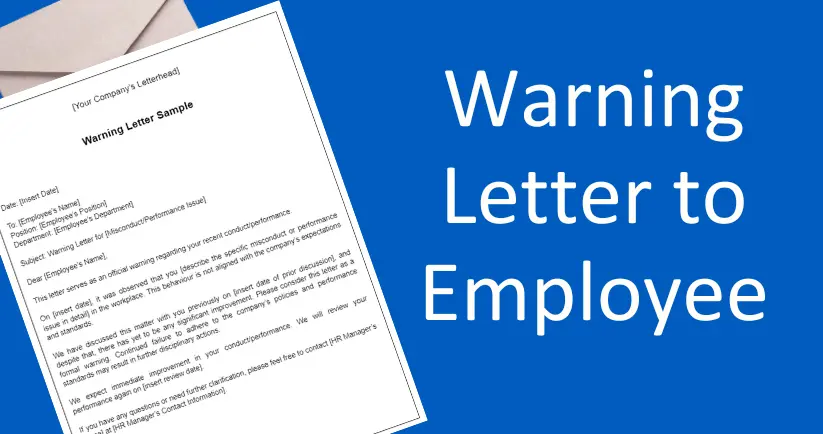
You can customize your warning letter template to suit your organization’s policies, but it should include the following essential elements:
1. Employee Information
- Employee’s full name
- Company name
- Job title
- Date of the warning
2. Manager Information
- Name and title of the direct supervisor or reporting manager
3. Description of the Issue
- A clear and factual summary of the concern
- Specific dates, times, and examples
- Any established pattern of behavior
4. Referenced Policies or Standards
- The exact company policies, procedures, or conduct standards that were violated
- References to sections in the employee handbook if applicable
5. Previous Interventions
- Details of prior conversations, coaching sessions, or verbal warnings
- Dates and outcomes of those discussions
6. Expectations for Improvement
- Clear corrective actions required
- Measurable goals or performance standards
- Deadlines or checkpoints for review
7. Employee Response Section
- Space to document the employee’s explanation or comments
8. Signatures
- Employee signature acknowledging receipt
- Manager signature
- HR representative signature
- Any applicable witness or union representative
The employee’s signature confirms receipt, not necessarily agreement.
9. Follow-Up Plan
- Date of the next review meeting
- Potential next steps depending on improvement
A well-designed warning letter template ensures all teams follow the same structure, maintain documentation standards, and communicate expectations clearly.
When Is a Written Warning Appropriate?
Deciding when to issue a written warning requires careful judgment. Below are common situations where a formal warning may be appropriate.
1. Attendance and Time-Related Concerns
When it may be justified: An employee repeatedly arrives late, extends breaks without authorization, or has ongoing unexplained absences despite prior discussions.
What to review first:
- Attendance records
- Productivity data
- Whether the employee understands the attendance policy
Management’s role: The direct manager should provide context. Is this a sudden issue? Has the employee disclosed personal challenges? Has there been any improvement?
The manager should also monitor progress after the warning is issued.
2. Ongoing Performance Issues
When it may be justified: Performance consistently falls below expectations despite coaching and feedback.
What to review first:
- Performance metrics
- Missed deadlines
- Quality concerns
- KPIs and review history
Management’s role: The manager should provide detailed examples and outline support already provided. They should help draft the warning letter template content and lead the improvement plan.
3. Violations of Company Policies or Values
When it may be justified: Misuse of company resources, minor safety violations, or behavior that conflicts with workplace values.
What to review first:
- Severity of the incident
- Intent versus carelessness
- Whether it is isolated or repeated
- Impact on the team or business
Management’s role: Collect documentation and confirm the employee received policy training. Continue monitoring behavior afterward.
4. Insubordination or Disrespectful Conduct
When it may be justified: Refusal to follow reasonable instructions or disrespectful communication toward leadership.
What to review first:
- Was the instruction clear and appropriate?
- Was there a misunderstanding?
- Is there a pattern?
Management’s role: Document events carefully. Involve HR early if escalation seems possible.
5. Data Confidentiality Concerns
When it may be justified: Careless handling of confidential data that does not rise to the level of immediate termination.
What to review first:
- Impact of the breach
- Whether training was provided
- Whether the lapse was accidental or negligent
Management’s role: Work with HR, IT, or legal to assess and document the situation properly.
Step-by-Step Procedure for Issuing a Written Warning
A consistent process reduces legal risk and internal conflict. Your disciplinary procedures should already be outlined in your employee handbook.
Here is a practical workflow:
Step 1: Gather Documentation
Collect evidence such as attendance logs, emails, performance reports, or witness statements. Review company policies and job descriptions to confirm expectations.
Step 2: Evaluate the Situation
Consult the employee’s manager. Review prior history and determine whether a written warning, rather than coaching, is appropriate. Ensure consistency with how similar cases were handled.
Step 3: Prepare the Warning Letter
Use your warning letter template to draft the document. Keep the tone factual and professional.
Step 4: Hold a Formal Meeting
Meet with the employee, their manager, and HR. Present the information calmly. Allow the employee to respond. Review the expectations and improvement timeline together. Schedule a follow-up meeting.
Step 5: Sign and File
Ask the employee to sign acknowledging receipt. If they refuse, document the refusal and have a witness sign. Store the document in the employee’s personnel file.
Step 6: Monitor and Follow Up
Track progress in collaboration with the manager. At the follow-up meeting, review improvements and determine next steps, whether closing the matter or escalating further.
Progressive Discipline: Benefits and Limitations
Written warnings are typically part of a progressive discipline framework. This structure usually follows these stages:
- Informal coaching
- Verbal warning
- Written warning
- Final warning or performance improvement plan
- Suspension or termination
Advantages of Progressive Discipline
- Ensures consistent treatment across employees
- Creates documented records for compliance
- Emphasizes correction rather than punishment
- Gives employees clarity and opportunity to improve
- Builds trust through transparency
Potential Drawbacks
- May feel overly rigid in complex situations
- Can encourage minimal compliance rather than genuine improvement
- Still relies on managerial judgment
- Does not always address nuanced interpersonal dynamics
- May be too slow in urgent scenarios
Final Thoughts
No manager looks forward to issuing a written warning. And no employee wants to receive one.
However, when approached with professionalism, respect, and consistency, a written warning does not have to damage workplace trust. In many cases, it creates the clarity needed for real improvement.
A structured warning letter template helps ensure that every situation is handled fairly, thoughtfully, and in alignment with company standards. It protects your organization while also giving employees a clear opportunity to correct course.
When supported by consistent documentation and open dialogue, a written warning becomes more than a disciplinary tool, it becomes part of a responsible and transparent people management process.
Become a part of the Paismo community
Paismo is an HR software that can help simplify your HR operations. In today's dynamic economic environment, efficient HR and automated payroll management are no longer a luxury but a necessity. Paismo is a comprehensive solution that transforms traditional HR complexes into streamlined and automated workflows. Paismo and its paired biometric device integration can be used for your business to mark employee attendance and record their timesheets accurately.
Paismo simplifies your tasks with its core HRMS, timesheets, and attendance management, as well as biometric attendance, payroll automation, and leave management system.
Take the first step toward modernizing your HR and payroll processes and explore what Paismo can do for you. Book a demo with our sales team.