

Highlights
- Employee experience improves engagement, retention, productivity, and overall workplace performance in modern organizations.
- HR software like Paismo helps streamline processes, automate tasks, and improve employee lifecycle management.
- A positive employee experience includes physical, digital, and cultural workplace environments.
- Businesses invest in employee experience to improve efficiency, collaboration, and long-term growth.
- Challenges include high costs, significant time investment, and difficulty in effectively measuring ROI.
Employee experience has become a key focus for modern HR teams looking to improve engagement, retention, and productivity. A positive employee experience helps organizations create a motivated workforce that drives long-term success. With the growing use of HR software and advanced HR software in UAE, companies can now manage the entire employee journey more efficiently, from hiring to development and retention.
This employee experience complete guide for HR will help you understand its importance, key components, and how to improve it in your organization. In this blog, we will explore everything step by step.
Define Employee Experience and Why It Matters?
Employee experience refers to everything an employee goes through during their journey in an organization, from recruitment and onboarding to daily work, growth, and exit. It includes all interactions with managers, colleagues, systems, policies, and the overall workplace environment that shape how employees feel and perceive their organization.
It matters because a positive employee experience directly impacts engagement, productivity, and retention. When employees feel supported and valued, they perform better and contribute more effectively to business goals. It also helps organizations build a strong workplace culture and improve overall performance and success.
Employee Experience Challenges
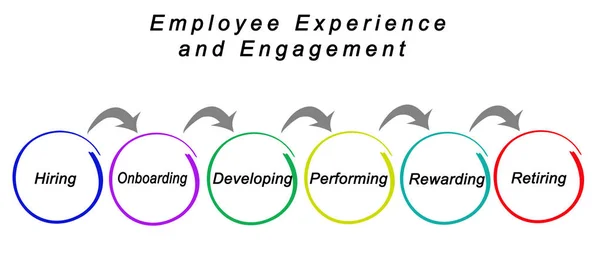
Employee experience challenges arise when organizations struggle to create a smooth, positive work journey, including the employee onboarding experience. These challenges often affect engagement, satisfaction, and productivity.
- Lack of data insights to understand employee needs and sentiments
- Inefficient systems and paperwork that slow down daily processes
- One-size-fits-all approach to employee development and growth
- Missing exit feedback from departing employees for improvement
Why Businesses Need to Invest in Employee Experience?
Businesses need to invest in employee experience because it helps employees work more efficiently by removing unnecessary obstacles and simplifying daily processes. This creates a smoother workflow across recruitment, onboarding, career development, and performance management. As a result, organizations see better collaboration, higher engagement, and improved productivity.
Key reasons include:
- Improved efficiency by removing workplace obstacles and simplifying processes
- Better use of HR tools for smoother recruitment and performance management
- Strong employee experience that improves engagement and retention
- Stronger onboarding experience that builds early employee engagement
- Higher collaboration and engagement across teams and departments
- Increased innovation and profitability through better employee performance
- Improved customer experience as employees deliver better service
What are the Key Components of Employee Experience?
Employee experience is shaped by three main components that directly influence how employees work, feel, and perform.
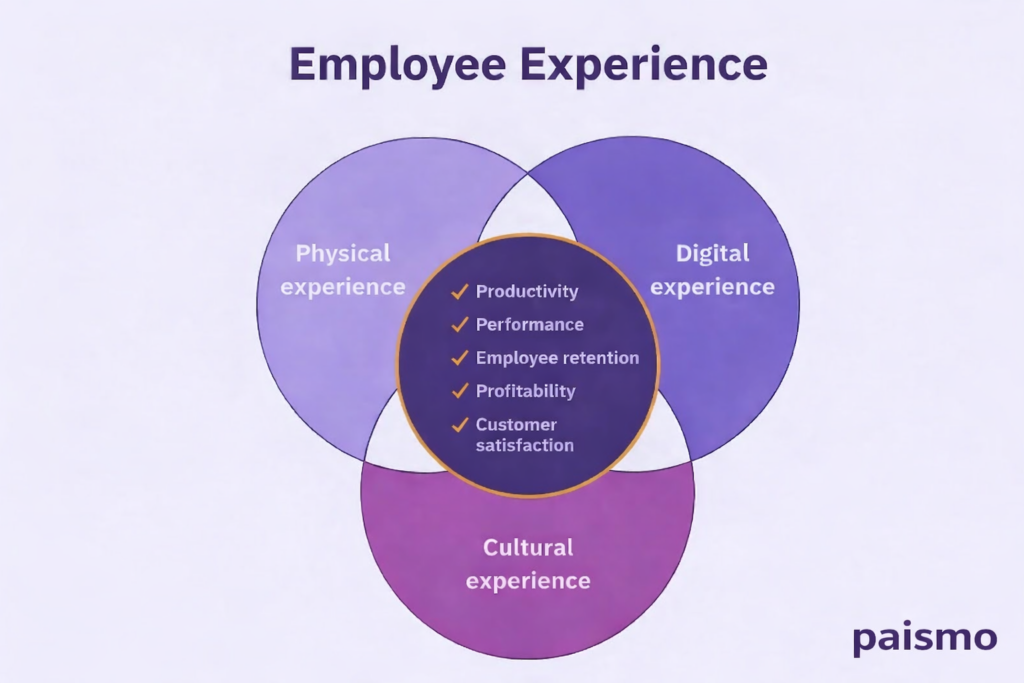
- Physical Experience
Physical experience refers to the workplace environment and how it supports daily work.
It includes office layout, furniture comfort, lighting, noise levels, and break areas. A good physical setup helps employees stay focused, comfortable, and productive. In hybrid and remote work models, organizations also redesign office spaces to support collaboration.
- Digital Experience
Digital experience refers to the technology employees use to complete tasks and interact with the organization.
It includes HR systems, communication tools, and workplace software that support daily operations. Simple and user-friendly systems improve efficiency, while complex tools create delays and frustration. Effective digital platforms help employees complete tasks faster, reduce manual work, and improve access to information.
- Cultural Experience
Cultural experience refers to the values, behaviors, and work environment within an organization.
It includes leadership style, teamwork, communication, and workplace values. A strong culture improves collaboration, motivation, and employee engagement. It also helps employees feel connected and aligned with organizational goals.
How to Improve Employee Experience?
Since a better employee experience contributes significantly to an organization’s success, it should be a central focus for HR leaders. Here are the most effective best practices to improve it:
Apply Employee Experience Design Methodology
Employee experience should be designed around meaningful interactions between employees and the organization, with a focus on improving every stage of their journey.
- Focus on employee-first thinking.
- Improve key employee touchpoints.
- Understand employee needs and expectations.s
- Design smoother workplace interactions.
Focus on the Full Employee Lifecycle
Employee experience covers the complete journey of an employee within the organization, from hiring to exit.
- Attraction and recruitment
- Onboarding process
- Retention and engagement
- Learning and development
- Offboarding experience
Foster Total Employee Wellbeing
Employees perform better when their physical, mental, and emotional well-being is supported.
- Physical health support
- Mental wellbeing programs
- Work-life balance
- Financial stability support
Prioritize Digital Employee Experience
Modern employees expect fast, simple, and efficient digital systems at work. Using HR software like Paismo improves digital workflows and reduces employee frustration.
- Easy access to HR systems
- Reduced manual processes
- Faster HR service delivery
- Improved employee productivity
Strengthen HR Systems and Automation
Modern HR platforms such as Paismo help automate HR tasks, improve communication, and manage employee data more efficiently, thereby improving the employee experience.
- Automate repetitive HR tasks
- .Improve internal communication flow
- Centralize employee data management
- Reduce manual administrative workload
- Increase overall HR efficiency
Build Continuous Feedback Culture
Regular feedback helps HR understand employee expectations and improve workplace satisfaction.
- Employee surveys
- Real-time feedback collection
- Acting on employee suggestions
- Continuous improvement system
Improve Workplace Communication
Clear and consistent communication builds trust and strengthens employee relationships.
- Transparent company policies
- Open communication channels
- Better manager-employee interaction
- Regular updates and alignment
Reduce Workplace Friction
Simplifying processes helps employees focus more on meaningful work rather than on administrative tasks.
- Less paperwork
- Faster approval processes
- Simplified HR workflows
- Easy-to-use systems
Employee Experience Advantage
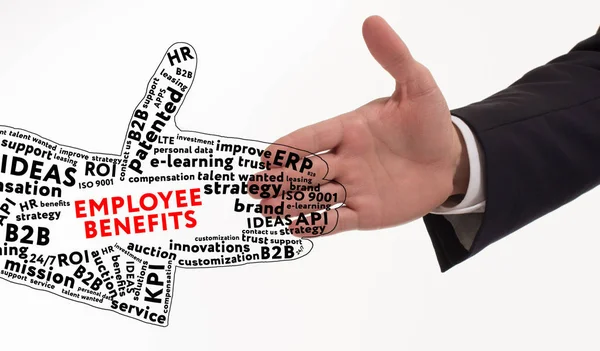
A strong employee experience improves overall workplace performance and helps organizations build a more engaged and productive workforce.
- Higher employee engagement
- Improved productivity
- Better employee retention
- Reduced employee turnover
- Strong employer branding
- Easier talent attraction
- Increased job satisfaction
- Better teamwork and collaboration
- Stronger workplace culture
- Higher employee motivation
- Improved customer service quality
- Greater innovation and creativity
Employee Experience Disadvantage
Despite its benefits, improving the employee experience can also pose challenges for organizations.
- High implementation cost
- Time-consuming process
- Requires continuous effort
- Difficult to measure ROI
- Risk of rising employee expectations
- Needs constant updates and improvements
- Heavy dependence on management commitment
- Possible resistance to change
- Requires cultural transformation
- Can create an imbalance in expectations
- Resource-intensive approach
- Results may take time to appear
Summary
Employee experience is a key factor in improving engagement, productivity, and retention in modern organizations. It covers the full employee journey, including workplace environment, digital tools, and company culture. Businesses can enhance it through better HR practices, automation, and employee-focused strategies. A strong experience helps build a motivated workforce and drives long-term organizational success.
FAQ
What Is Employee Experience?
Employee experience is the overall journey and perception an employee has in an organization. It includes recruitment, onboarding, daily work, growth, and exit. It reflects how employees feel, interact, and perform at work.
How to Improve Employee Experience?
Employee experience can be improved by simplifying processes, improving communication, and supporting employee well-being. Organizations should reduce workplace friction and focus on employee needs. Using modern HR tools also helps create a smoother work environment.
How HR Can Improve Employee Experience?
HR can improve employee experience by designing better employee journeys and improving onboarding processes. It should collect employee feedback and enhance communication across teams. Using digital HR systems automates tasks and improves efficiency.
Become a part of the Paismo community
Paismo is an HR software that can help simplify your HR operations. In today's dynamic economic environment, efficient HR and automated payroll management are no longer a luxury but a necessity. Paismo is a comprehensive solution that transforms traditional HR complexes into streamlined and automated workflows. Paismo and its paired biometric device integration can be used for your business to mark employee attendance and record their timesheets accurately.
Paismo simplifies your tasks with its core HRMS, timesheets, and attendance management, as well as biometric attendance, payroll automation, and leave management system.
Take the first step toward modernizing your HR and payroll processes and explore what Paismo can do for you. Book a demo with our sales team.