


Highlights
- Centralized setups keep everything organized, but can slow down the process when teams need quick approval.
- Decentralized setups move faster and adjust easily, yet different teams may not always follow the same direction.
- In centralization, top leaders make the major decisions; in decentralization, decision-making power is distributed to teams.
- Both structures impact how people work together, their level of confidence, and the smoothness of daily tasks.
- Real-world examples demonstrate how each model excels, from control and consistency to flexibility and innovative ideas.
Centralization and decentralization decide who makes decisions. Centralized systems provide clear guidance, while decentralized ones allow teams to act more quickly and independently. Many companies, especially those using HR software or HR software in UAE, adjust their setup to improve workflow and decision-making.
In this guide, you’ll explore centralization and decentralization, learn about their advantages and disadvantages, understand the key differences, and review real-world examples that demonstrate how each structure operates in practical situations.
What Is a Centralized and Decentralized Organizational Structure?
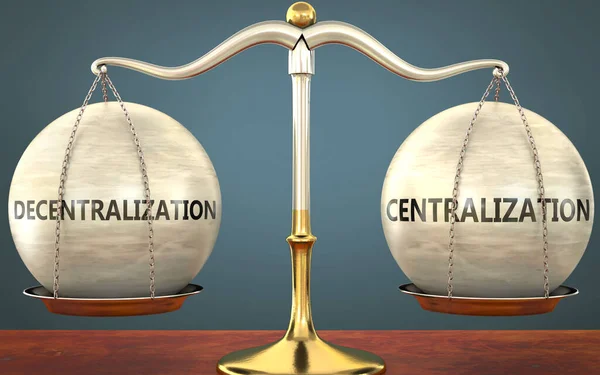
Centralized Organizational Structure
In a centralized organizational structure, senior managers make key decisions. Then, they pass instructions down through the control layers, keeping work clear and consistent. This setup helps companies cut costs, standardize processes, and coordinate across teams. It also helps enhance employee engagement by providing clear expectations and structured workflows. Centralized models are commonly found in traditional businesses and smaller organizations.
Decentralized Organizational Structure
In a decentralized organizational structure, managers and teams make many decisions independently of one another. They then share results with upper management. This approach works well for companies that need flexibility, quick responses, or regional adjustments. It also empowers employees, encourages new ideas, and supports career growth, which is why modern and fast-growing companies often use it.
Advantages and Disadvantages of Centralization
Centralization gives companies precise control and consistent processes, making management easier and more structured. However, it can also slow down decision-making and reduce flexibility in rapidly changing environments.

Advantages of Centralization
- Transparent Decision-Making: Reduces confusion and overlaps, and using Paismo can make communication and approvals easier.
- Consistency: Maintains uniform policies, procedures, and messaging across all teams.
- Strong Control: Leaders maintain full oversight and strategic focus, while employee recognition is easier to handle centrally.
- Efficiency: Avoids duplication of effort across departments.
- Cost-Effective: Cuts administrative overhead, and talent management software like Paismo helps streamline tracking.
Disadvantages of Centralization
- Slower Decisions: Teams wait for top management approvals, but Paismo apps can help speed up the process.
- Reduced Flexibility: Local managers have limited freedom to respond quickly to changes.
- Low Employee Morale: Staff may feel disconnected from decisions that affect their work.
- Bottlenecks: Concentrating responsibility at the top can overload leaders.
- Limited Innovation: Lack of autonomy can discourage initiative and creative problem-solving.
Advantages and Disadvantages of Decentralization
Decentralization spreads decision-making across teams, giving employees more autonomy and speeding up processes. While it encourages innovation and ownership, it can also create coordination challenges if not managed properly.
Advantages of Decentralization
- Faster Decisions: Local teams make choices without waiting for top management; using Paismo can make approvals and workflows even easier.
- More Flexibility: Teams can quickly adjust to customer or market needs.
- Higher Motivation: Employees feel trusted and take ownership of their work, which also supports HR processes effectively.
- More Innovation: Teams generate creative ideas and solutions.
- Less Pressure on Leaders: Senior managers focus on strategy rather than daily tasks, and HR & payroll management becomes simpler with tools like Paismo.
Disadvantages of Decentralization
- Inconsistent Results: Different teams may follow varying methods or standards, though Paismo apps can help reduce discrepancies.
- Harder to Coordinate: It’s more challenging to keep everyone aligned and moving in the same direction.
- Varied Skills: Not all managers are equally ready to make smart decisions.
- More Expensive: Running multiple independent units can increase costs.
- Risk of Narrow Focus: Teams may prioritize local goals over the company’s bigger picture.
Centralization vs Decentralization with Examples
Organizations structure authority in different ways, and this choice shapes how teams work, respond, and grow. Some companies keep control at the top, while others allow decisions to flow through multiple levels. Both approaches influence speed, flexibility, and employee involvement.
Leaders compare these structures to find the right balance for stability and quick action.
To understand the key difference, here are clear example of centralization and decentralization working in real situations, explained in a smooth flow.
1. Decision-Making Authority
In a centralized system, top-level management makes the most important decisions. Lower-level staff follow a clear chain of command with limited input on major matters.
Centralization Example:
A traditional bank’s head office sets all loan rules. Branch managers must follow policies and cannot alter terms without approval.
In decentralization, decision-making spreads across departments or branches. Teams make choices that directly affect their daily operations.
Decentralization Example:
A retail chain’s local store manager adjusts pricing or stock levels based on local demand.
2. Speed of Action
Centralized structures often slow down decision-making because nearly every approval must be routed upward.
Centralization Example:
A national health department sends all emergency plans to top officials, causing delays during local outbreaks.
Decentralized systems act faster because teams don’t wait for high-level permission.
Decentralization Example:
A hospital department responds immediately to changing patient needs without upper management approval.
3. Flexibility and Responsiveness
Decentralized teams adapt quickly since they understand local conditions and can adjust without waiting for top-level decisions.
Centralization Example:
A global food company uses the same advertisement in every country, ignoring cultural differences.
Centralized structures maintain uniformity but react slowly to unique situations.
Decentralization Example:
McDonald’s customizes menus for each region, such as McAloo Tikki in India.
4. Consistency and Standardization
Centralization ensures high consistency across all branches or departments.
Centralization Example:
Apple controls product design globally, delivering a uniform user experience.
Decentralization can lead to varied practices if guidelines are not maintained.
Decentralization Example:
Schools in one district adopt different teaching methods, resulting in different outcomes.
5. Employee Involvement and Morale
Decentralized models involve employees more, boosting confidence and ownership.
Centralization Example:
In a corporate office where all decisions come from executives, staff may feel unheard.
Centralized systems may reduce motivation because lower-level employees rarely have the opportunity to contribute to major decisions.
Decentralization Example:
3M allows employees to spend time on self-chosen projects, encouraging innovation.
6. Cost and Efficiency
Centralization cuts costs by merging systems and avoiding duplicate roles.
Centralization Example:
A major airline uses a central IT system for all bookings, reducing technical expenses.
Decentralization may cost more due to separate systems, but results improve through faster service and better decisions.
Decentralization Example:
Subway franchises manage staffing and expenses independently, improving local service.
7. Innovation and Creativity
Decentralized teams often generate fresh ideas because they have more freedom.
Centralization Example:
Manufacturing firms with strict processes limit employee suggestions.
Centralization maintains control but may restrict creativity.
Decentralization Example:
Google’s small autonomous teams experiment freely, creating products like Gmail.
8. Control and Oversight
Centralization enhances oversight by involving fewer decision-makers.
Centralization Example:
Amazon monitors logistics and delivery metrics through a central system.
Decentralization requires trust and strong reporting to ensure consistent performance.
Decentralization Example:
A university system allows each campus to set its own policies but relies on regular audits.
Summary
Organizations structure authority in different ways; centralization and decentralization show how decision-making power is shared across the company. Centralized systems maintain control and consistency, while decentralized teams react more quickly and bring fresh ideas. Both models shape teamwork, decision-making, morale, and overall efficiency. Real-world business examples demonstrate where each approach is most effective, ranging from quick responses to robust uniform policies.
FAQs
What Is Centralization And Decentralization?
Centralization keeps decision-making at the top, ensuring uniformity and control, while decentralization empowers teams to act quickly and adapt, boosting flexibility and engagement.”
What Are The Characteristics Of Centralized And Decentralized Information System?
Centralized systems have a single control point, uniform data, and easier monitoring. Decentralized systems distribute data and control, enabling flexibility, faster updates, and local decision-making.
Become a part of the Paismo community
Paismo is an HR software that can help simplify your HR operations. In today's dynamic economic environment, efficient HR and automated payroll management are no longer a luxury but a necessity. Paismo is a comprehensive solution that transforms traditional HR complexes into streamlined and automated workflows. Paismo and its paired biometric device integration can be used for your business to mark employee attendance and record their timesheets accurately.
Paismo simplifies your tasks with its core HRMS, timesheets, and attendance management, as well as biometric attendance, payroll automation, and leave management system.
Take the first step toward modernizing your HR and payroll processes and explore what Paismo can do for you. Book a demo with our sales team.