

Key Highlights
- AI in HR automates repetitive tasks, analyses large datasets, and enables smarter, faster HR decisions.
- The use of AI in HR customizes training, development, engagement, and communication to individual needs, improving satisfaction and retention.
- AI monitors labor laws, automates payroll and policies, and flags potential compliance issues.
- While AI boosts productivity, HR must address potential biases, privacy concerns, ethical issues, and the need for human judgment in sensitive situations.
In 2025, AI in HR is no longer a simple enhancement, it marks a complete shift in how organisations attract, manage, and support their people. This guide explores the powerful ways AI is reshaping human resources and how HR teams can leverage it to build smarter, more efficient, and people-centric workplaces.
How AI in HR Is Being Implemented Across the Employee Lifecycle
As HR leaders search for advanced solutions to modern workforce challenges, AI in HR has become a driving force behind improved decision-making, operational efficiency, and enhanced employee experiences. Below are the key areas where AI is redefining HR processes.
Recruitment and Talent Acquisition
AI has dramatically improved the accuracy and speed of modern hiring. HR teams now use AI to:
- Screen resumes with greater precision, quickly identifying relevant skills and job matches.
- Detect skill gaps and predict candidate suitability using data-driven insights.
- Automate interview scheduling, saving hours of administrative work.
- Enhance candidate experience by offering faster responses and more personalised touchpoints.
These improvements help ensure a more streamlined and objective recruitment process, while giving HR teams more time to focus on strategic talent decisions.
Employee Engagement and Retention
AI in HR enables organisations to move from reactive to proactive engagement strategies. Through continuous analysis of employee data, AI can:
- Identify early signs of disengagement or burnout
- Detect patterns linked to turnover
- Recommend targeted interventions to improve satisfaction
- Support communication and collaboration through smart, real-time insights
With these capabilities, HR teams can design personalised engagement initiatives that strengthen overall retention and workplace morale.
Compliance and Risk Management
Staying compliant with labour laws and internal policies can be complex, AI significantly reduces this burden. AI tools can:
- Monitor compliance with working hours, leave policies, and payroll regulations
- Automate calculations to avoid human errors
- Flag inconsistencies before they become risks
- Ensure HR processes remain aligned with changing legal standards
By improving accuracy and timeliness, AI helps protect organisations from compliance issues and fosters a trustworthy, transparent work environment.
AI-Powered Onboarding
AI in HR is transforming the onboarding journey into a personalised, efficient, and employee-friendly experience. AI now helps organisations:
- Automatically transfer candidate data into onboarding systems
- Tailor onboarding tasks based on role, department, or seniority
- Provide structured checklists to prevent missed steps
- Customise training materials based on new hire profiles
This creates a smoother transition for new employees, boosting early engagement and increasing long-term retention.
Learning and Development
AI is revolutionising training and development by making learning deeply personalised. Using behaviour and performance data, AI can:
- Recommend customised learning paths
- Analyse strengths, weaknesses, and growth opportunities
- Deliver interactive and adaptive learning formats
- Predict future skill requirements, helping HR stay ahead of workforce trends
This ensures employees receive relevant, high-impact training while the organisation future-proofs its skill capabilities.
Performance Management
AI in HR delivers more accurate, continuous, and unbiased performance evaluation. It supports HR departments by:
- Aggregating feedback from multiple sources
- Tracking goal progress in real time
- Identifying high-potential employees and talent gaps
- Recommending personalised development plans
- Providing insights that connect individual performance with organisational priorities
AI-powered performance management promotes fairness, transparency, and alignment across all levels of the organisation.
Offboarding
AI is also reshaping how companies handle offboarding to enhance both efficiency and organisational learning. AI tools can:
- Automate administrative steps (e.g., exit interviews, payroll processing, access removal)
- Analyse exit feedback to identify improvement areas
- Ensure strict compliance with data security and legal requirements
- Tailor offboarding workflows based on role and tenure
- Highlight opportunities for re-engaging former employees in the future
With AI, offboarding becomes more than a formality, it becomes a strategic process that contributes to long-term organisational improvement.
Pros and Cons of AI in HR: Understanding the Impact of Human-AI Collaboration
As AI in HR continues to reshape the modern workplace, it introduces a blend of powerful advantages and important challenges. Below is a clear breakdown of the key benefits and drawbacks of integrating artificial intelligence into HR functions.
Benefits of AI in HR
1. Improved Efficiency
AI in HR significantly increases operational efficiency by automating repetitive tasks such as resume filtering, interview scheduling, onboarding workflows, and data processing. This reduces manual workload, minimises errors, and accelerates hiring timelines. With administrative tasks handled by AI, HR teams can redirect their focus toward strategic areas like talent development, culture-building, and organisational planning.
2. Data-Driven Decision-Making
One of the strongest advantages of AI in HR is its ability to turn large volumes of data into actionable insights. AI tools analyse trends, predict workforce needs, identify skill gaps, and enhance candidate evaluation. This leads to more accurate hiring decisions, better workforce planning, and improved alignment between HR initiatives and organisational goals, all while reducing decision-making bias.
3. Personalized Employee Experience
AI personalises the employee journey by tailoring learning, development, and engagement activities to individual needs. By analysing behaviour, performance, and preferred learning styles, AI creates customised development paths that boost job satisfaction and retention. Targeted communication, timely feedback, and personalised recommendations contribute to a more supportive and engaging workplace.
4. Reduced Bias in Hiring
AI in HR helps minimise unconscious bias by evaluating candidates based on data rather than subjective judgment. It focuses on skills, qualifications, and performance indicators, contributing to fairer and more objective hiring practices. AI can also detect hidden patterns of bias in historical data, enabling HR teams to address inequities and promote diversity.
5. Scalability
As organisations grow, AI supports HR departments by managing increased workloads without requiring proportional increases in staff. Whether handling high application volumes, expanding performance evaluation cycles, or managing complex employee data, AI ensures consistent accuracy and process reliability.
6. Enhanced Compliance
AI strengthens compliance by monitoring evolving labour laws, tracking regulatory changes, and flagging potential risks. It automates record-keeping, generates compliance reports, and ensures HR processes follow legal standards. This reduces the likelihood of non-compliance and protects organisations from penalties or operational disruptions.
7. Continuous Performance Management
AI in HR enables real-time tracking of employee performance, offering instant insights instead of relying solely on annual reviews. Continuous feedback helps managers address concerns early, recognise progress, and maintain transparent performance discussions. Over time, AI can identify patterns that reveal strengths, gaps, and development opportunities.
8. Cost Savings
By automating recruitment, onboarding, payroll tasks, and other HR operations, AI helps reduce overall costs. Fewer administrative delays, reduced errors, and improved process efficiency allow organisations to operate more cost-effectively while allowing HR to allocate resources toward strategic priorities.
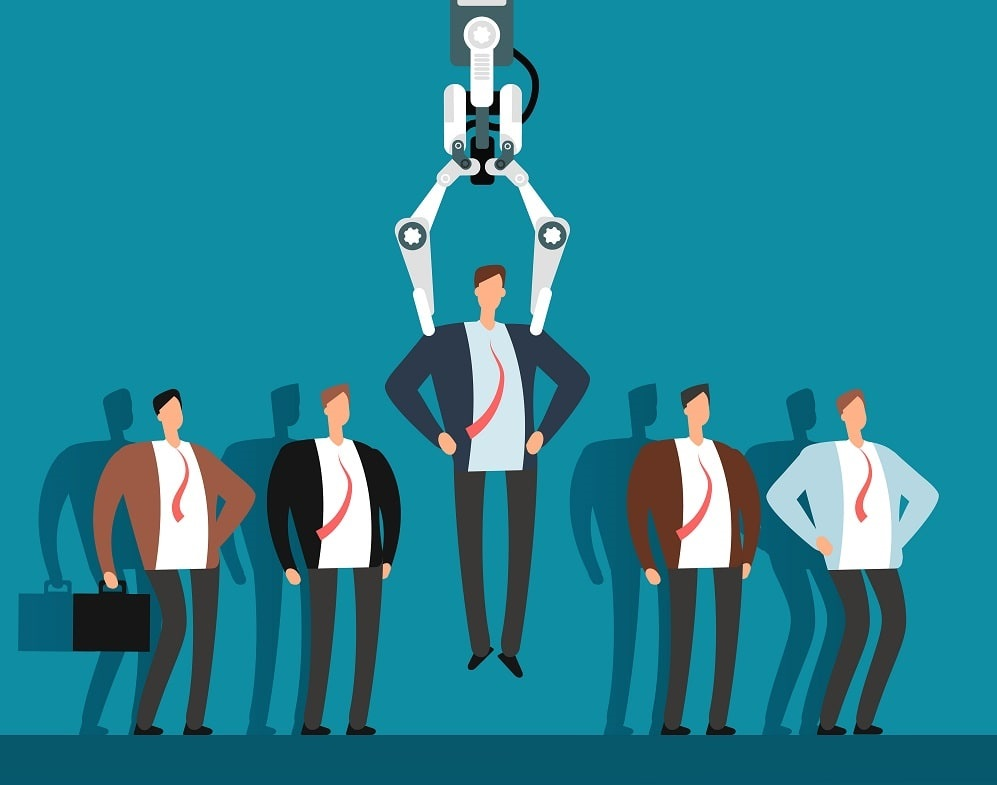
Challenges of AI in HR
1. Potential Bias in Algorithms
Although AI decreases human bias, biased algorithms or flawed training data can introduce new forms of discrimination. If historical hiring data contains patterns of ageism, gender bias, or other prejudices, AI systems may unintentionally replicate these issues. Regular audits, ethical oversight, and diverse datasets are essential to ensure fairness.
2. Privacy Concerns
AI in HR relies heavily on collecting and analysing sensitive employee information, raising concerns about data privacy and security. Performance metrics, behavioural data, and personal information must be protected carefully. Without strong safeguards, employees may feel uneasy or mistrustful. Clear communication and compliance with data protection laws are essential.
3. Lack of Human Touch
AI cannot replace empathy, intuition, or emotional intelligence. Sensitive HR activities, such as conflict resolution, employee counselling, or handling layoffs, still require human involvement. Over-reliance on AI may make employees feel disconnected or undervalued, emphasising the need for balanced, human-centred HR practices.
4. Over-Reliance on Automation
Depending too heavily on AI may weaken interpersonal skills and human judgment within HR teams. While automation increases efficiency, critical thinking, relationship-building, and problem-solving remain essential for HR success. A healthy balance ensures AI supports rather than replaces human expertise.
5. Ethical Concerns
AI-driven HR decisions raise questions about transparency and accountability. Employees may question how AI reached certain conclusions, especially in hiring, promotions, or performance evaluations. Additionally, automation may lead to job restructuring within HR departments. Ethical use requires clear policies, explainable AI, and well-defined responsibility structures.
6. Resistance to Change
Introducing AI in HR can create resistance among employees who fear job displacement or feel uncertain about adopting new technologies. Others may struggle with unfamiliar tools or processes. Effective training, communication, and reassurance are crucial for building trust and encouraging acceptance.
7. Complex Implementation
Integrating AI into established HR systems can be technically challenging and resource-intensive. It may require data migration, customisation, infrastructure upgrades, and expert support. Without proper planning and skilled implementation, organisations may face disruptions or delays.
How to Use AI in HR: 5 Practical Applications
This section highlights practical ways AI in HR is transforming key functions. Many outcomes require combining multiple AI tools, such as HR software, LMS platforms, and generative AI systems.
When choosing an AI HR solution, ensure it can integrate with other platforms, possibly via public APIs. Here are five practical applications of AI in HR:
1. AI in Recruitment and Hiring
- AI-powered Applicant Tracking Systems (ATS): Automatically sort and rank candidates based on job requirements.
- Resume screening and candidate ranking: AI analyzes resumes using natural language processing and predictive algorithms to match candidates to roles.
- AI chatbots for engagement: Handle candidate queries, schedule interviews, and provide real-time updates.
- Predictive analytics for hiring: Use historical hiring data to forecast candidate success, improving selection and retention.
2. AI in Employee Engagement and Retention
- Sentiment analysis and surveys: AI analyzes employee feedback to gauge engagement and detect concerns.
- Personalized career development: AI recommends tailored growth paths based on skills, interests, and performance.
- Internal mobility tracking: Identifies employees ready for new roles, supporting promotions.
- Generative AI for communication: Drafts personalized recognition messages, internal announcements, and policy summaries, while minimizing errors with specialized HR tools.
3. AI in Performance and Workforce Analytics
- Predictive performance insights: AI forecasts employee performance trends, enabling proactive support.
- Goal tracking and feedback tools: Monitor progress, suggest improvements, and provide real-time insights.
- Workforce planning and forecasting: Predicts talent needs and identifies skill gaps for future readiness.
4. AI in Learning and Development
- Personalized training programs: AI recommends courses tailored to employee needs.
- Adaptive learning platforms: Adjust training modules in real time to suit different learning styles.
- Mentorship matching: AI pairs employees with mentors based on skills and career goals.
5. AI for HR Automation and Compliance
- Document processing and summaries: Automates scanning, categorizing, and summarizing HR documents.
- Payroll and benefits administration: AI calculates salaries, deductions, and distributes benefits efficiently.
- Compliance monitoring: Tracks labor laws, policies, and regulations while alerting HR teams to updates, ensuring legal adherence.
Become a part of the Paismo community
Paismo is an HR software that can help simplify your HR operations. In today's dynamic economic environment, efficient HR and automated payroll management are no longer a luxury but a necessity. Paismo is a comprehensive solution that transforms traditional HR complexes into streamlined and automated workflows. Paismo and its paired biometric device integration can be used for your business to mark employee attendance and record their timesheets accurately.
Paismo simplifies your tasks with its core HRMS, timesheets, and attendance management, as well as biometric attendance, payroll automation, and leave management system.
Take the first step toward modernizing your HR and payroll processes and explore what Paismo can do for you. Book a demo with our sales team.